This is not about market crashes. It is about the keys to the vault. We explore the ‘Digital Archaeology’ of lost fortunes to ensure yours stays safe.
In the world of cryptocurrency, fortunes vanish — not because markets crash, but because passwords are forgotten, hard drives are thrown away, and sophisticated scams steal billions from unsuspecting investors.
In this post you will discover:
– How 20% of all Bitcoin is lost forever — not stolen, just gone
– The $220 million password that Stefan Thomas can’t remember
– A treasure worth $500M buried under 100,000 tonnes of trash
– The exact steps a crypto scammer uses to steal your money
– A simple hierarchy to protect your digital wealth
By the end of this post, you will know exactly what not to do with your crypto — and exactly what to do instead.
20% of All Bitcoin Is Lost Forever
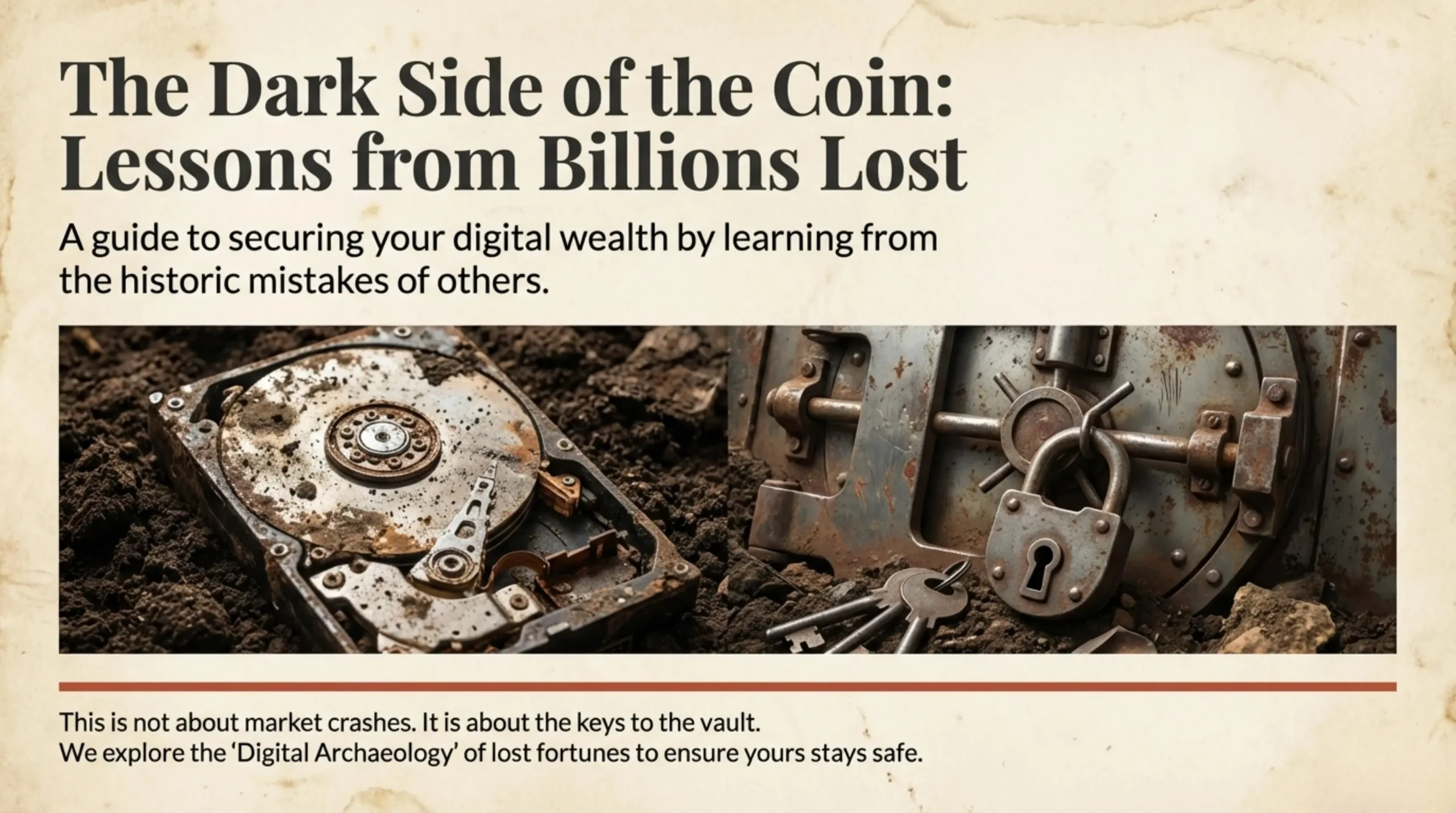
According to Chainalysis, approximately 3.7 million Bitcoin — around 20% of all Bitcoin ever mined — are sitting in wallets that can no longer be accessed. These coins were not stolen. They are not on an exchange. They are simply gone.
This equals billions of dollars lost not to theft, but to human error — forgotten passwords, destroyed drives, and death without instructions.
The Reality: In traditional banking, you can call support to reset a password. In crypto, there is no ‘Forgot Password’ button. Being your own bank means accepting full liability.
The blockchain is transparent but unforgiving. Your coins sit there, visible to the entire world, and there is absolutely nothing anyone can do to retrieve them.
The $220 Million Guessing Game
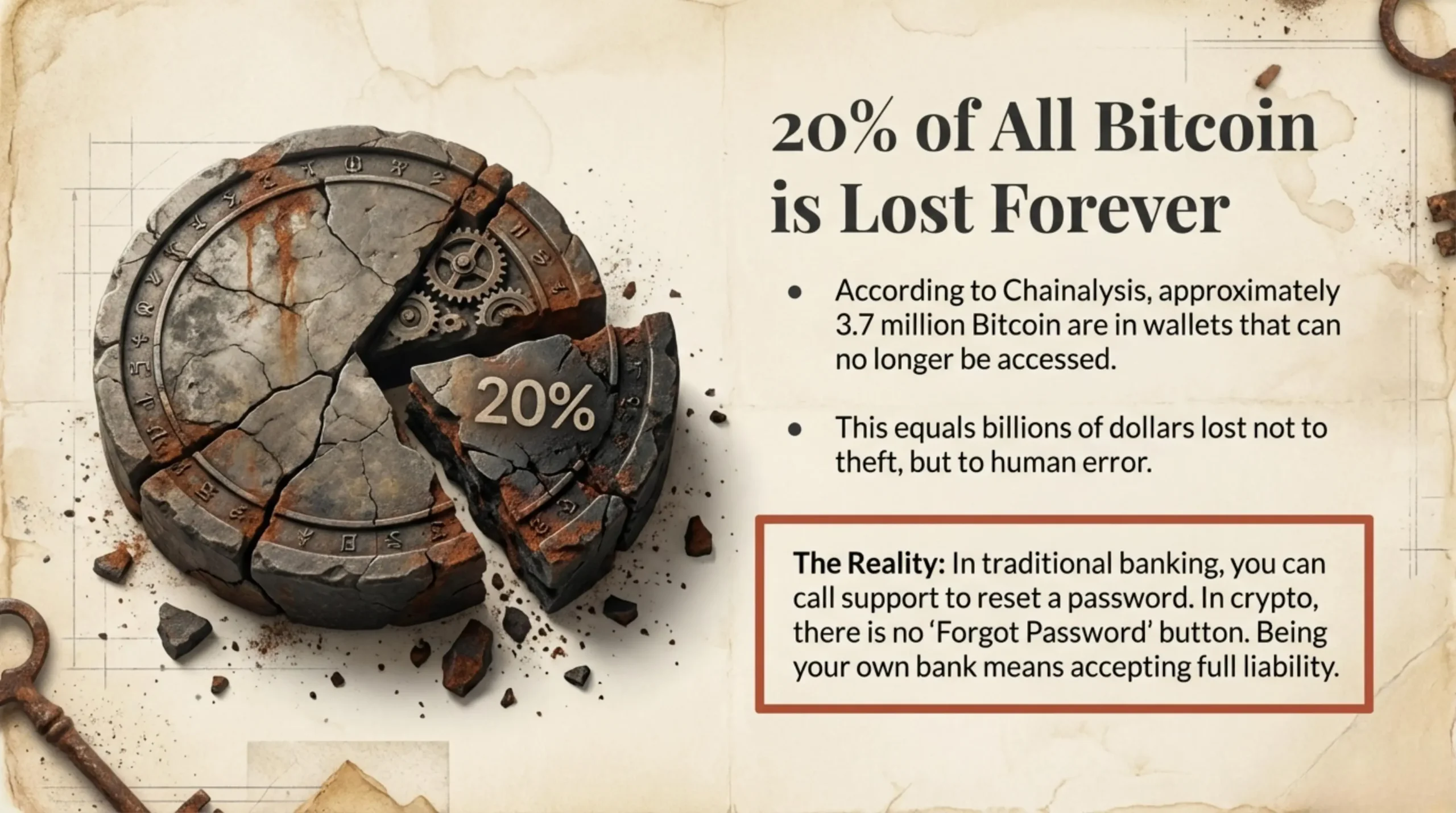
Subject: Stefan Thomas, programmer
Asset: 7,002 Bitcoin — approximately $220 million
The Error: Wrote password on paper. Lost the paper.
Stefan Thomas stored his Bitcoin fortune on an IronKey encrypted USB drive — one of the most secure devices available. The IronKey has a fatal feature: after 10 failed password attempts, it permanently erases itself.
He has used 8 of those 10 attempts. Two guesses remain. $220 million on the line.
“I would just lie in bed and think about it… I would be desperate again.” — Stefan Thomas
Imagine knowing your fortune sits inches away, locked behind a password you once knew. Every guess could be your last.
⚠️ Lesson: Human memory is a critical point of failure. Never rely on remembering a password.
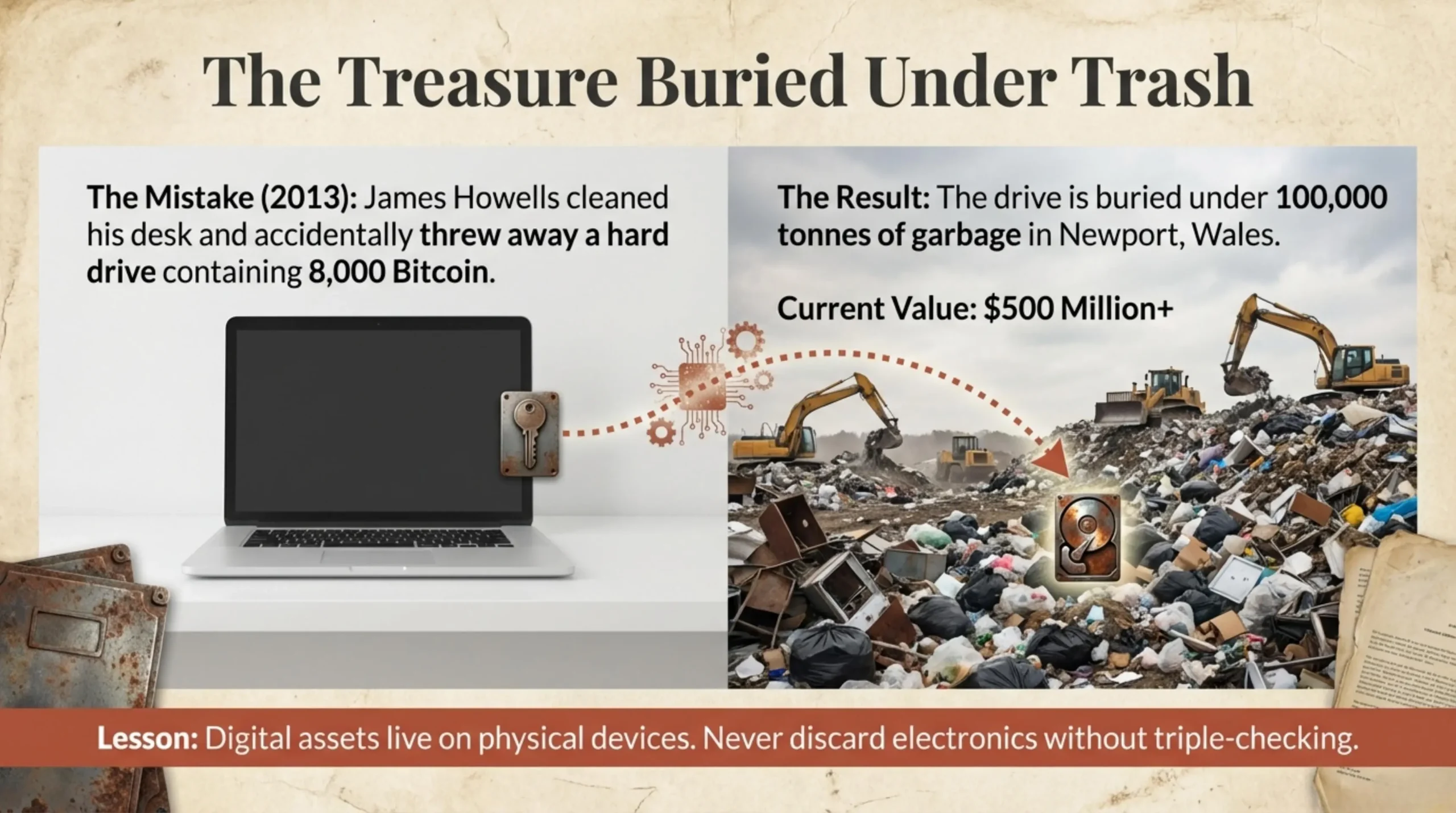
The Treasure Buried Under Trash
Subject: James Howells, IT worker, Newport, Wales
Asset: 8,000 Bitcoin — current value over $500 million
The Error: Threw away the wrong hard drive while cleaning his desk (2013)
In 2013, James Howells had two identical-looking hard drives on his desk. One was empty. One contained the private keys to 8,000 Bitcoin. During a spring clean, he threw away the wrong one.
That drive is now buried under 100,000 tonnes of garbage in a Newport landfill. For over a decade he has fought the city council for permission to excavate — offering them 25% of the recovered value. The city keeps saying no.
📦 Lesson: Digital assets live on physical devices. Never discard any old electronics without checking them first.
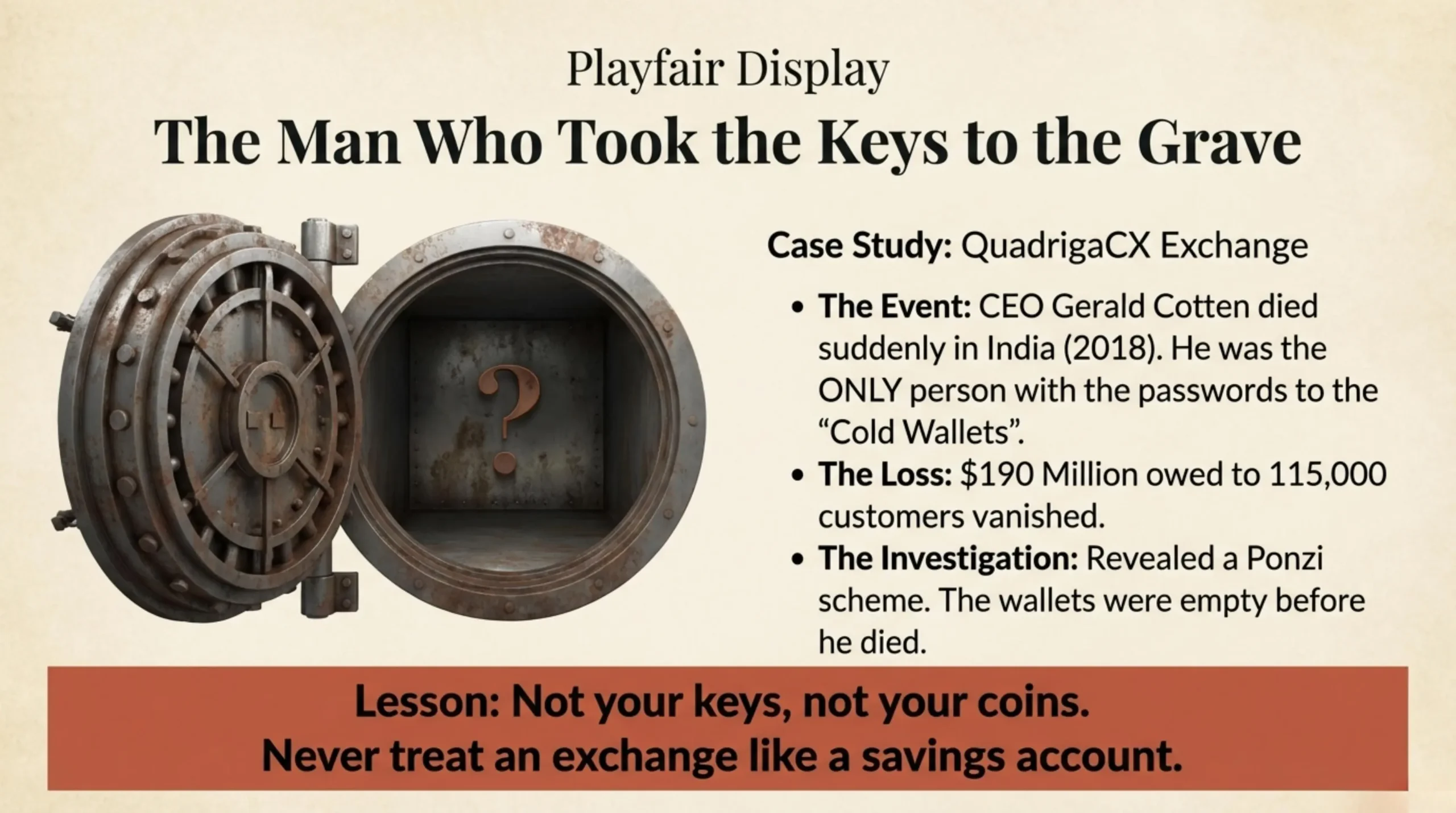
The Man Who Took the Keys to the Grave
Case Study: QuadrigaCX Exchange Event:</strong> CEO Gerald Cotten died suddenly in India, December 2018 Problem:He was the ONLY person with the cold wallet passwords
<strong>Loss: $190 million owed to 115,000 customers vanished
Later investigations by the Ontario Securities Commission revealed the truth: QuadrigaCX was a Ponzi scheme . The wallets were already empty before Cotten died. He had been using new customer deposits to pay existing withdrawals.
Not your keys, not your coins. When you store crypto on an exchange, you own an IOU — not the actual asset. Never treat an exchange like a savings account.
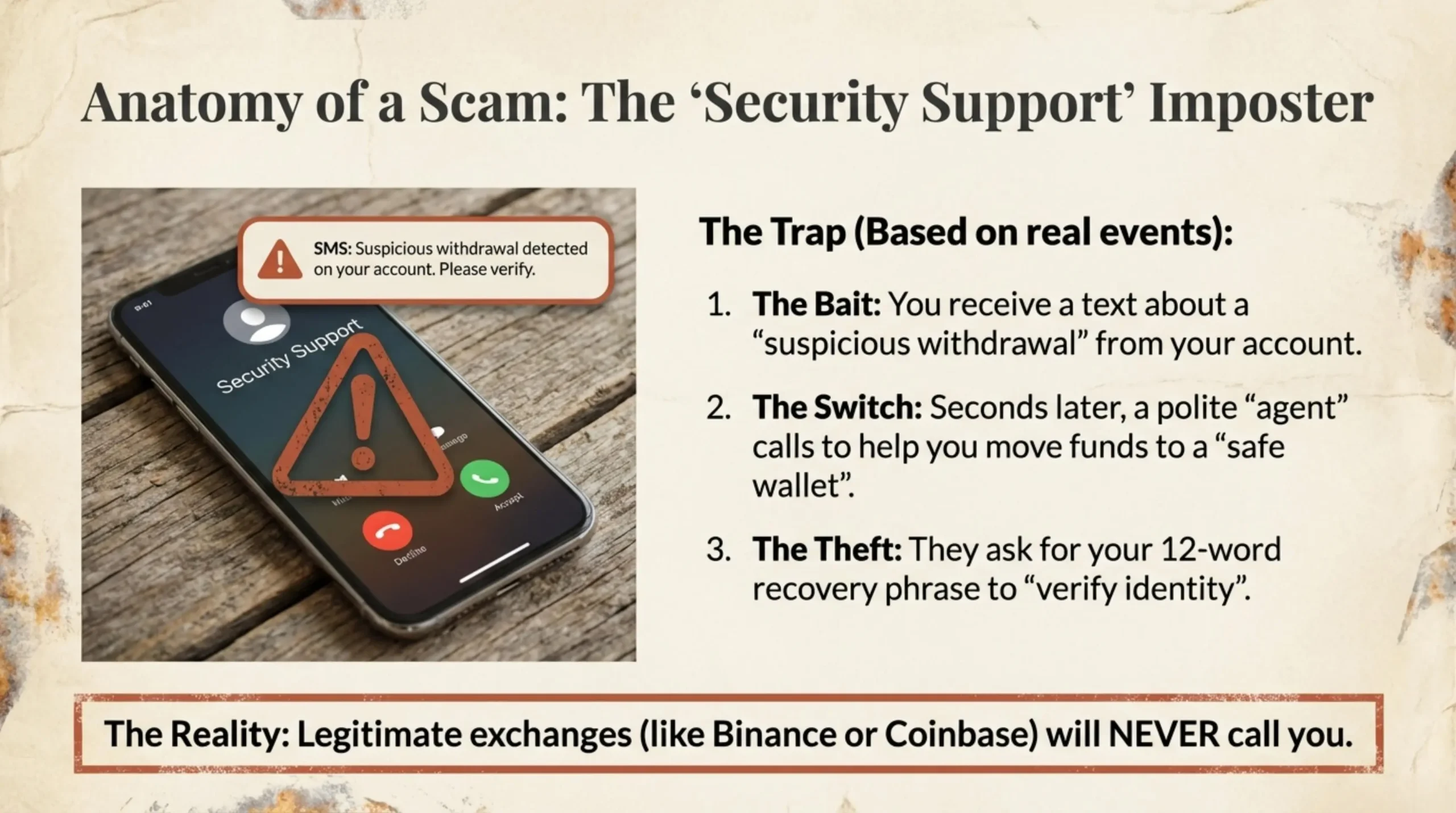
Anatomy of a Scam: The ‘Security Support’ Imposter
Modern crypto scams are frighteningly sophisticated. Here is the exact playbook scammers use — based on a real case that cost an investor $13,500 USD.
Step 1 — The Bait You receive a text message about a “suspicious withdrawal” from your account. It looks exactly like a real Binance or Coinbase message.
Step 2 — The Switch Seconds later, a polite “agent” calls to help you move funds to a “safe wallet.” They have your name, they know your exchange, they sound professional. They create urgency: “Your account is being drained right now.”.
Step 3 — The Theft
They ask for your 12-word recovery phrase to “verify your identity.” Once they have it, they own your wallet completely. They drain it in seconds.
🚨The Reality: Legitimate exchanges like Binance or Coinbase will NEVER call you. Ever.
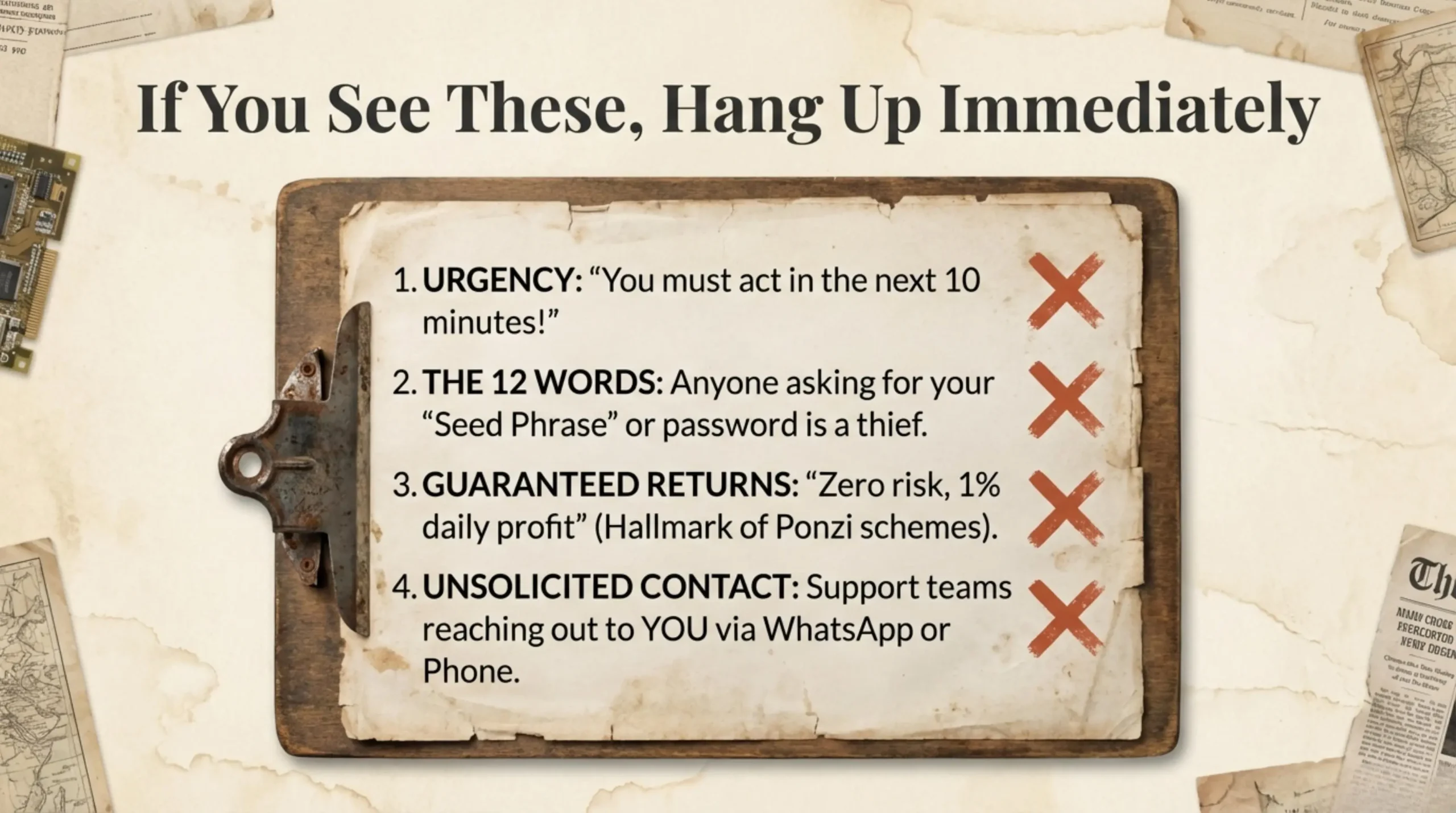
If You See These Signs, Hang Up Immediately
These four signs mean you are being scammed — no exceptions.
URGENCY:”You must act in the next 10 minutes!” Real security doesn’t have a countdown.
THE 12 WORDS: Anyone asking for your Seed Phrase or password is a thief. There is zero legitimate reason for this.
GUARANTEED RETURNS: “Zero risk, 1% daily profit.” This is the hallmark of every Ponzi scheme ever created.UNSOLICITED CONTACT: Support teams reaching out to YOU via WhatsApp or phone. Real companies do not do this.
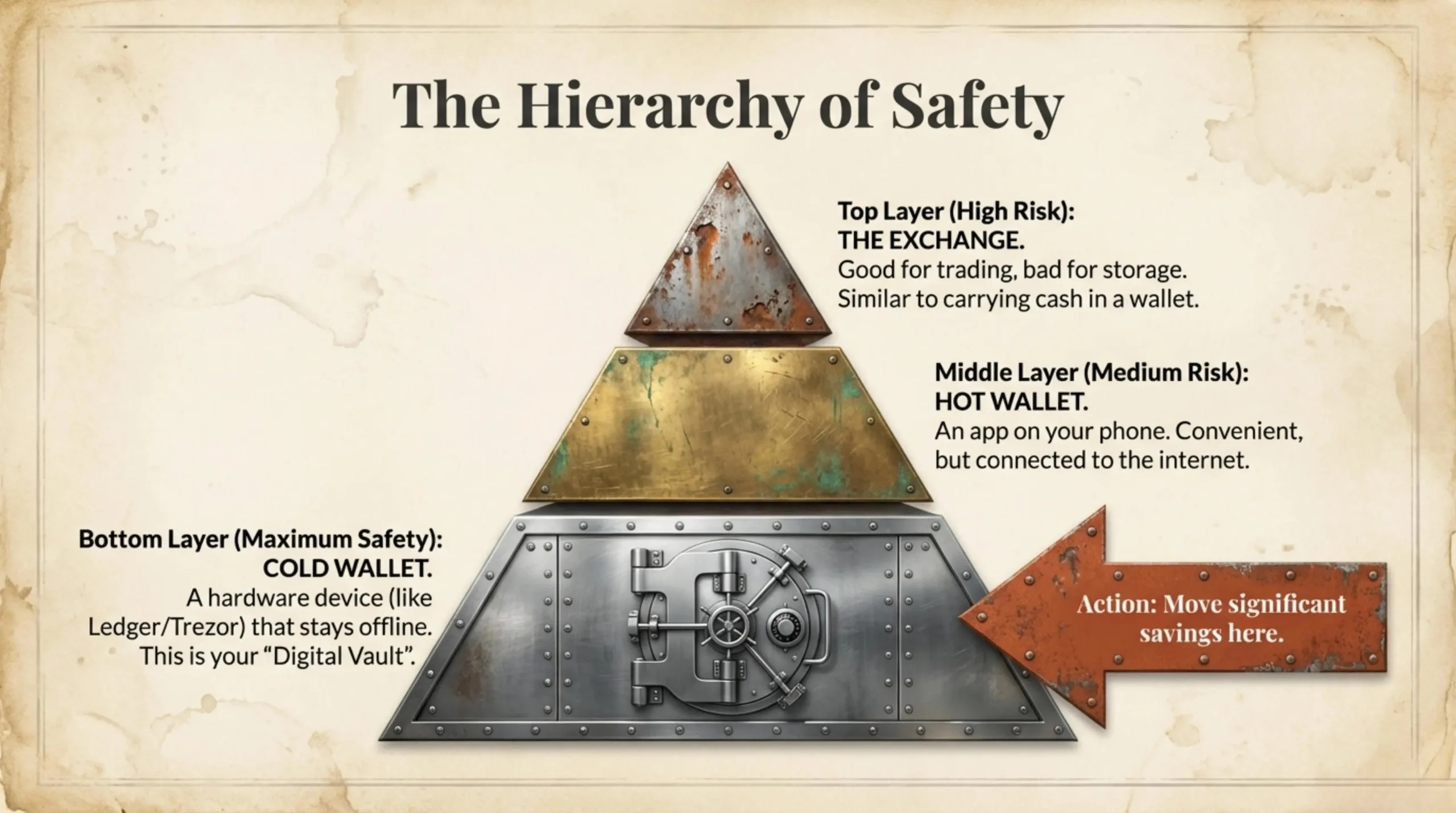
The Hierarchy of safety
Not all wallets carry the same risk. Understanding this hierarchy could save your fortune.
Top Layer — The Exchange (Highest Risk)
Platforms like Binance or Coinbase. Good for active trading. You do not control the private keys. Think of it like carrying cash in your pocket — convenient, but not where you keep your savings.
Middle Layer — Hot Wallet (Medium Risk)
Apps like MetaMask or Trust Wallet on your phone. You control the keys, but the device is always connected to the internet, making it vulnerable to malware and phishing.
Bottom Layer — Cold Wallet (Maximum Safety)
Hardware devices like Ledger or Trezor</strong> that stay completely offline. This is your digital vault. Private keys never touch the internet. Even if your computer is hacked, your funds are safe.
Action: Move significant savings to a cold wallet.
If you have more crypto than you’d feel comfortable carrying as cash on the street, it belongs in hardware storage.
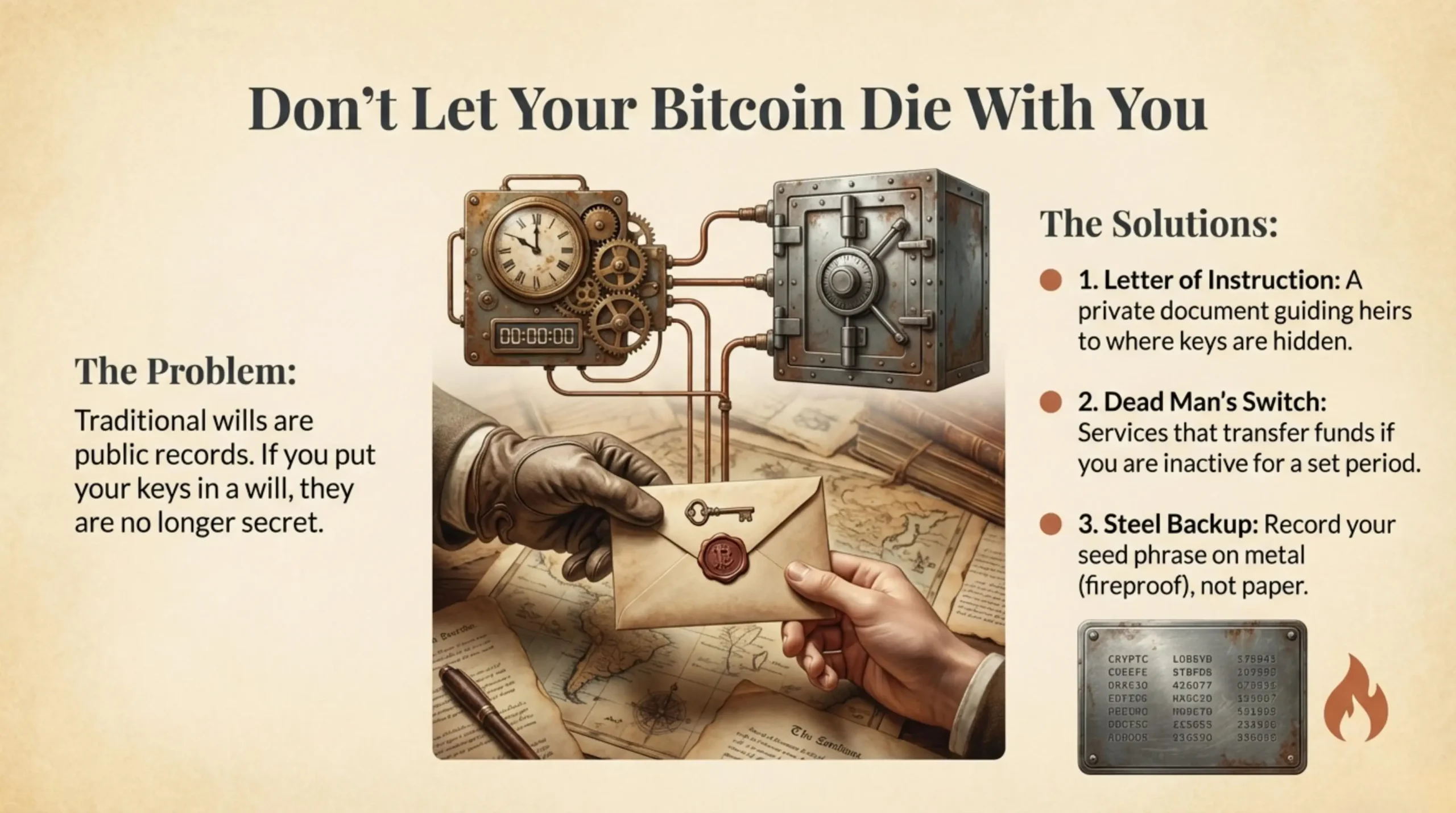
Don’t Let Your Bitcoin Die With You.
Unlike a bank account, crypto has no “next of kin” access. If you die without leaving instructions, your Bitcoin dies with you.
Traditional wills are public records. Writing your seed phrase in a will means anyone who accesses probate records could steal your fortune. So what do you do?
Three Practical Solutions
A private document (not in your public will) that guides heirs to where your keys are hidden. Store it with your lawyer.
Dead Man’s Switch: Services that automatically transfer funds if you haven’t logged in for a set period — for example, one year.Steel Backup: Record your seed phrase on a fireproof metal plate, not paper.
Be Your Own Bank — Responsibly
Cryptocurrency gives you unprecedented control over your financial assets. No middleman. No government interference. No bank fees.
But the price of that freedom is full personal responsibility.
There is no customer service hotline. No forgot-password button. No deposit insurance.
You are the bank.That means you also carry the vault keys.
The Three Pillars of Crypto Security
BE SKEPTICAL:
Trust no one who contacts you. Legitimate support never initiates contact.
BE ORGANIZED: Secure your physical devices. Back up your seed phrase in multiple geographic locations.
BE PRIVATE:Never share your seed phrase — not with support, not with security audits, not with anyone.
The billions lost to crypto are not a failure of the technology. They are a failure of preparation. You now know better. Don’t become the next cautionary tale.